Understanding a brain aneurysm
A brain aneurysm is a balloon-like dilation of a weakened arterial wall. Many unruptured aneurysms cause no symptoms; a ruptured aneurysm can cause subarachnoid haemorrhage and is a medical emergency.
Aneurysm coiling and flow diversion
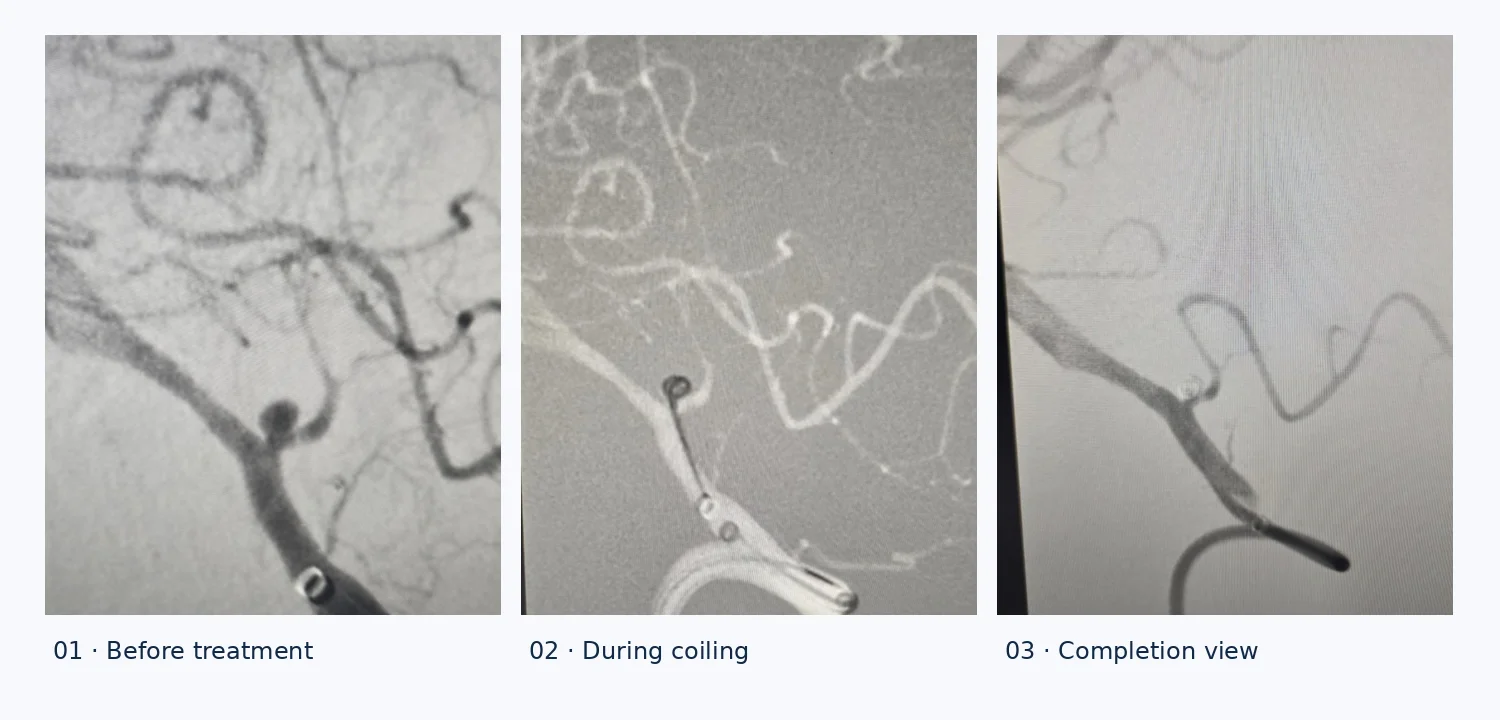
Endovascular coiling places detachable coils into an aneurysm through a microcatheter. Flow-diverting stents redirect blood flow along a parent artery in selected aneurysm configurations and may require antiplatelet medication. The approaches have different indications, risks and follow-up requirements.
Microsurgical clipping
In clipping, a neurosurgeon reaches the aneurysm through an operation and places a clip across the aneurysm neck. Some aneurysms are more suitable for clipping, while others are treated endovascularly.
How decisions are made
Clinical presentation, CT/CTA, MRI/MRA or DSA findings, aneurysm location, morphology, vessel branches, patient age and other conditions all guide treatment recommendations.